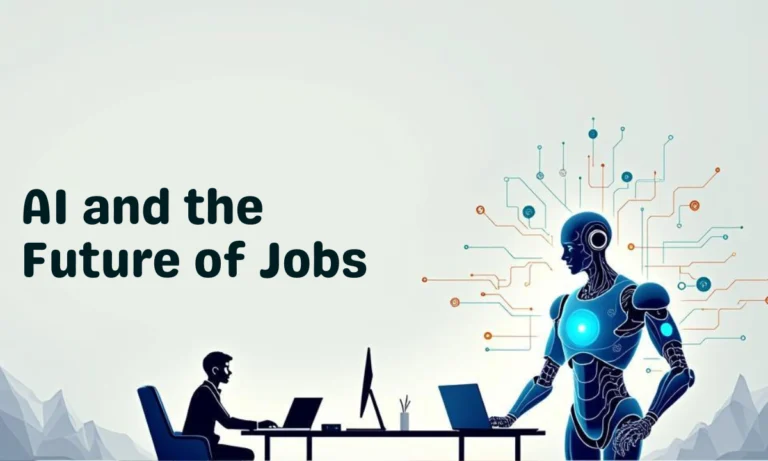


Artificial Intelligence (AI) is no longer a luxury for businesses — it’s a necessity. From automating routine tasks to driving strategic decisions, AI is reshaping the way organizations operate. Whether it’s a startup or a global enterprise, businesses using AI gain efficiency, insight, and a competitive edge.

How AI is Used in Business Today
Business Process Automation
AI automates repetitive tasks like data entry, invoice processing, email sorting, and customer service responses, freeing employees to focus on higher-value work.Predictive Analytics for Decision Making
Companies use AI to analyze past performance and predict future trends, helping leaders make data-driven decisions in areas like sales forecasting and inventory management.Customer Relationship Management (CRM)
AI-powered CRMs like Salesforce Einstein and HubSpot analyze customer interactions to suggest the best follow-up actions, improving retention and satisfaction.Marketing & Sales Optimization
AI helps businesses target customers more effectively through personalized ads, content recommendations, and automated campaign management.Risk Management & Fraud Detection
AI systems detect anomalies in financial transactions, protecting companies from fraud and helping with compliance monitoring.
Benefits of AI in Business
Increased Efficiency: Automation saves time and reduces costs.
Smarter Decision Making: AI provides data-driven insights for better strategies.
Improved Customer Experience: Personalized recommendations and 24/7 chatbots enhance satisfaction.
Competitive Advantage: Early AI adopters gain speed, accuracy, and innovation edge.
Reduced Human Error: Machine learning algorithms minimize mistakes in repetitive processes.
Challenges of Using AI in Business
High implementation and maintenance costs.
Lack of skilled professionals.
Data privacy and ethical concerns.
Resistance to change in traditional organizations.
AI and the Future of Business
AI-Powered Decision Support: AI will soon advise leaders on strategy and resource allocation.
Autonomous Operations: Smart factories and self-managing systems will handle workflows independently.
Enhanced Customer Insights: Businesses will understand consumer behavior in real-time.
Sustainable Growth: AI will help optimize energy usage and reduce waste, making business operations eco-friendly.
Conclusion
AI in business is not about replacing humans — it’s about enhancing human potential. By automating repetitive tasks and enabling smarter decisions, AI helps businesses scale faster, serve customers better, and adapt to change effortlessly. The companies that embrace AI today will define the success stories of tomorrow.
✅ FAQ – AI in Business: Automation & Decision Making
1️⃣ What is AI in business?
AI in business refers to using artificial intelligence tools and technologies to automate tasks, analyze data, improve decision-making, and enhance customer experiences.
2️⃣ How does AI improve business automation?
AI automates repetitive, time-consuming tasks such as data entry, customer support responses, and financial processing — helping businesses operate faster with fewer errors.
3️⃣ Can AI help business decision-making?
Yes. AI analyzes large amounts of data, predicts trends, and provides actionable insights that help leaders make smart, data-driven decisions.
4️⃣ What industries use AI the most?
Healthcare, retail, finance, manufacturing, e-commerce, logistics, and IT are leading industries using AI for automation and strategy.
5️⃣ Is AI expensive for small businesses?
Not necessarily. Cloud-based AI tools and automation platforms are now affordable, scalable, and easy to integrate for startups and SMEs.
6️⃣ Will AI replace jobs?
AI will replace tasks, not people. It allows employees to focus on creative, strategic, and relationship-driven work instead of repetitive operations.
7️⃣ What are the risks of AI in business?
Key risks include data privacy issues, cybersecurity threats, ethical concerns, and implementation challenges without proper planning.